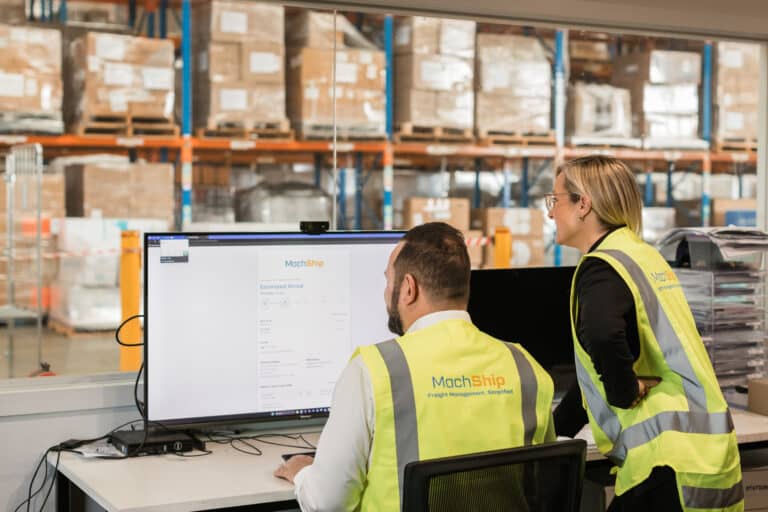
Radio Parts is an Australian electronics company that has supported industry, government, and consumers since 1935. They supply a wide range of audio, visual, communications, security, and smart technology products, backed by technical expertise and a focus on customer service. Their goal is to make reliable technology accessible and easy to use, both now and into the future.
Managing freight complexity as volumes increased
Radio Parts previously used MachShip for freight management, but when they moved onto Microsoft Dynamics 365 Business Central as their enterprise resource planning system, the two systems were not integrated. As order volumes increased, the team was required to work across multiple carriers, systems, and manual processes to dispatch orders, creating inefficiencies and placing additional pressure on internal resources.
Freight was managed across four to five separate carrier portals. This limited visibility across shipments and required significant manual administration to coordinate dispatch activities.
Tasks such as quoting freight or creating consignments often required multiple teams and additional time to complete. These inefficiencies began to affect dispatch capacity, customer service responsiveness, and the company’s ability to scale with confidence.
Radio Parts reassessed their freight management approach and identified the need for a multi-carrier solution that could integrate directly with Business Central.
Centralising freight operations in Business Central
To support Radio Parts’ growing freight requirements, MachShip partnered with Fenwick Apps to develop Deliver-It with MachShip. A reusable integration for Business Central that connects the platform with MachShip’s multi-carrier freight system.
The objective was to create a more connected freight process by reducing manual handling, centralising carrier management, and improving visibility across dispatch operations within Business Central.
Fenwick Apps led the development of the integration layer, mapping Business Central processes to MachShip’s system and defining how freight data would move between the two platforms. This included aligning shipment events, carrier responses, and transactional data so both systems remained synchronised throughout the freight lifecycle.
Working closely with MachShip, the Fenwick Apps team connected APIs across both platforms and validated data flows through testing. This ensured information such as bookings, tracking updates, and shipment statuses remained consistent and accurately reflected in real time.
This created a connected multi-carrier freight experience within Business Central, removing the need for teams to work across multiple external carrier platforms.
The solution: Deliver-It with MachShip
With the integration in place, Radio Parts gained the ability to manage freight activity directly within Business Central, using a single connected environment for day-to-day dispatch operations.
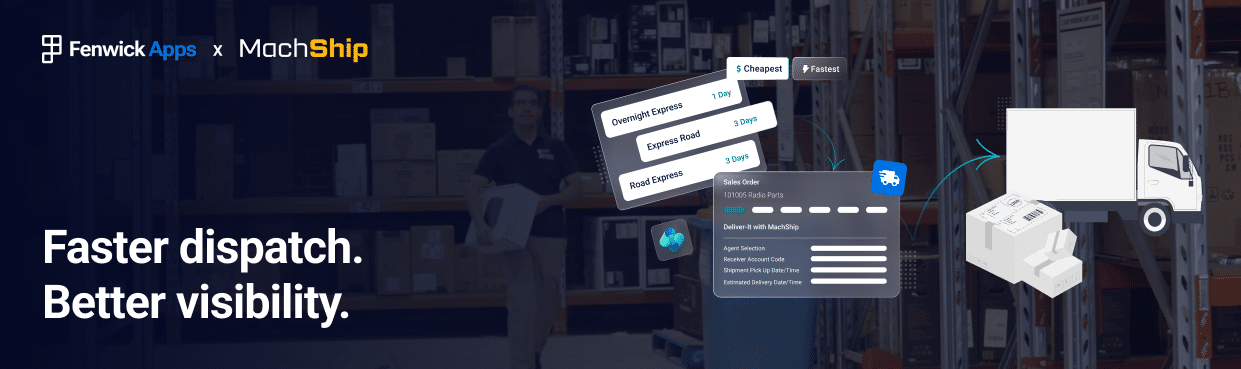
Users could view carrier options, generate quotes, create consignments, print shipping labels, book freight, and track shipments without leaving Business Central. Carrier selection and shipment execution could be handled within existing workflows, reducing reliance on external portals.
Freight information updated in real time, providing teams with consistent visibility across orders, shipments, and delivery status. This improved coordination between sales, support, and dispatch teams while reducing manual handling across the freight process.
The results: Faster dispatch and improved visibility
With Deliver-It with MachShip embedded into Dynamics 365 Business Central, Radio Parts moved from a fragmented freight process to a single, connected workflow.
Freight operations that previously relied on multiple carrier systems are now managed entirely within Business Central, giving teams a more consistent and controlled dispatch environment.
This shift has reduced the time required to complete core freight tasks. Sales and support teams can now generate freight quotes directly within Business Central, removing dependency on dispatch and saving up to five minutes per order. Packing and consignment creation have also been reduced by approximately 50%, helping orders progress through dispatch more efficiently.
Improved visibility across shipment activity has strengthened coordination between internal teams. Customer service teams can access up-to-date tracking information without manual follow-ups across carrier portals, improving response times and reducing operational friction.
Overall, Radio Parts has improved control over freight activity, reduced reliance on manual processes, and established a more scalable dispatch model that better supports ongoing growth in order volumes.
Implementing an integrated freight solution inside Business Central has fundamentally changed how we manage freight at Radio Parts.
Tim Heames
Looking forward
With the integration now embedded into Dynamics 365 Business Central, Radio Parts has a stable foundation for managing multi-carrier freight as part of its core business systems.
The connection between MachShip and Business Central provides a flexible framework that can support evolving freight requirements as order volumes grow and carrier networks expand. This positions the business to continue building on its existing workflows without adding complexity across systems.
As Radio Parts’ operations develop, the integration ensures freight management remains aligned with broader business processes inside Business Central, supporting ongoing improvements to efficiency, control, and scalability.
To see the freight management outcomes delivered through MachShip’s platform, read the MachShip case study here.